Miranda July lets a female first person narrator tell the story of her mid-life crisis (I hesitate to use this cliché label because, though the crisis happens in mid-life, but there is more to it). She married her older husband, Harriss, when she was thirty. She moved into his house using its garage as her workspace (she is a semi-famous artist). Now, at forty-five and with a five-year-old son (who she refers to as “they”), their family life seems to be settled. It is this what increasingly becomes a problem for the narrator. Sex with Harriss was fixed at once a week, initiated by her wearing high heels and nothing much else upon entering his bedroom. Much later in the novel, a fried tells her about her sex during menopause. Since there was no longer any hormonal drive, “it all becomes mental. I have to create a narrative that makes it possible, otherwise it starts feeling like rape.” On which the narrator sonders, “This was new to her? I’d always had to get out ahead of sex, dig an inclined trough so it could flow easily downhill. Being walloped, pounded by lust was very recent. Very” (p. 175). Earlier, she already had the feeling that her marriage was not commensurate with her personality. “One day when we were both ready I would reveal my whole self to Harriss” (p. 40). But could she hide her growing feelings of alienation?
She pushes things forward when she is supposed to drive from Los Angeles to New York. Intuitively, she stops at a motel (Excelsior) in Monrovia, just about a twenty-minute drive from her home. She redesigns one of the motel rooms with the 20,000 US Dollars that she had received for a small job and starts a three-week ecstatic conversational and sexual relationship with a young man, Davey. She dies to have him fuck her, but he cannot be unfaithful to his wife, Claire, who had carried out the redecoration of the room. All the while, she pretends to be on her way to New York. This experience brings to light her real self that she had planned to reveal to Harriss at a later point.
After her return home, unsurprisingly, she is hit, not by regret, but by the feeling of having lost a vital part of what it meant to be her. “Before even opening my eyes, it was obvious that I had experienced too much joy in the Excelsior. Regular life—my actual life—was completely gray, a colorless, never-ending expanse. Just get through this one, first day. But this was too long. An hour was too long” (p. 141f; original italics). On page 150, we read, “I glanced at the sex high heels before bed, but there was no hurry now, there were still four days to initiate before the week was up.” Soon enough, she “owed him several weeks’ worth of sex … my mood was impacting the household, its smooth runnings” (p. 158). She realized that she had “lost my bond to my actual family and formed an alliance with someone who might as well be fictional” (p. 152).
There seemed to be no way out. A medical examination revealed that she was in perimenopause. This only increased her sense of urgency because menopause would mean the loss of her libido, though some of her friends advised her that true bodily autonomy only came with this physical change. Anyway, she had spent a day per week in her room at the Excelsior for some time, and the moment of truth with Harriss approached. On page 256, she is forced to admit that she had sex with a woman. Harriss asks her, “‘Is it going to happen again?’ No, no, it won’t happen again; I’m so sorry, can you ever forgive me? ‘Yes,’ I said, ‘It’s probably going to happen again’” (original italics). She has one day per week in Monrovia, Harriss has one day per week in his office. The narrator has a failed sexual relationship with a woman, Harriss has a “girlfriend” the age of his wife. When he tells her, she asks, “‘You guys used that word? Girlfriend?’ I was aghast. ‘Yeah; it’s quick, I know. But I’m not like you—I have no interest in exploring at this age’” (p. 261; original italics).
Near the end of the novel, the narrator stays in a different room of the motel. When she wakes up, she finds herself mentally in the past. “Very gently, I took my laptop out of my bag and climbed back into the thin bed. I wrote it as I saw it, alive before my eyes” (p. 310). Thus, the author introduces a self-referential loop to have the narrator whom she had invented start writing the story told in this novel. Four years later, at forty-nine, while Harriss and his “girlfriend” are gone camping with Sam, she is on an airplane travelling to New York to promote her book.
Unlike Vincenzo Latronico’s Perfection, a novel that features an all-knowing narrator of the lives of his characters, Dahlia de la Cerda’s Reservoir Bitches is a collection of 13 short stories with first person narrators, even when the character who narrates her story has died already. The first story begins with the sentence, “I sat on the toilet, peed on the pregnancy test, and waited the longest minute of my life. Positive. I had a panic attack and then felt almost happy; I rubbed my belly tenderly” (p. 1). The rest of the ten pages of this story are about the way of getting rid of this unwanted pregnancy. The final sentence reads, “I sat on the floor and stuck my hand in the toilet. There it was: a little sac the size of my pinkie with rosy bean floating inside it. I sighed with relief and smiled, then tossed it back in and flushed” (p. 10).
Of the other twelve short stories, four are interconnected perspectives of young women in the drug cartel milieu. This small series starts with “Yuliana,” the daughter of a drug cartel chief and his heiress. Who becomes friends at school with Regina, the daughter of a congressman. Through Yuliana, Regina gets to know the son of another section of the drug trade. At the beginning, he treats her very well. Then, he becomes abusive. One day, mad with unfounded jealousy, he kills both one of his bodyguards and her, while she is on the phone crying for help from Yuliana. She arrives too late. Since then, she wanted to have him killed. Her father and her own boyfriend would not act, because the killer is the protégé of a leader of that section of the drug trade. So, killing him would lead to a major violent conflict. Yet, a chance arrives when Yuliana gets a new female bodyguard, “La China.” She orders her to kill Regina’s murderer. When it was done, “All hell broke loose you can imagine. Roadblocks with trucks on fire and more than a hundred dead in a month. We came out pristine” (p. 35), because they had made it look like another group was responsible. “La China” also gets to tell her story as does “Regina.” She tells us that the last thing she heard was Yuliana saying “Wait right there, babe. I’m on my way. … Then everything was smoke and lead and blood” (p. 108).
The story “The smile” is about a gang rape of a female factory worker, her torture, and her killing. She says, “It didn’t take me long to figure out I was in a freaking cave in the middle of the desert. At least I was alive. I had cheated death, I thought. What I didn’t realize was – I am death” (p. 128). In her quest for retribution, she gets help from El Charro Negro, a figure from Mexican folklore. At one point, she walks into a public restroom: “I looked in the mirror. I couldn’t see my reflection but I knew it was me. The same me who’d walked out of the maquiladora that morning. The exact same person. I was dead but the desert hadn’t devoured me: it had spat me out, puked me up. I smiled” (p. 133).
In another story, “Sequins,” a transvestite is killed by a group of man. She says, “I woke up in a daze, not knowing what had happened. I glanced left and right and then shrieked at the sight of my body dumped on a pile of garbage. I walked up to it slowly and confirmed my suspicions: I was dead. Those fucking mayates had killed me” (p. 143). The closing story, “La Huesera,” deepens the theme of male violence against women in Mexico. It takes the form of a long moving letter that the female friend of a killed women writes to her, expressing her grief, anguish, self-hatred, but also her fond memories. This story includes several pages about the violence that women in Mexico are subjected to by men. She writes, “I was shocked. Did you know that ten women are murdered every day in Mexico? That’s more than one every three hours. Ironic, right? To be telling you this, but it really knocked me on my ass. What were we doing while other women were being raped, beaten to death, and dismembered? I felt freaking awful. I felt like the worst person in the world, because if I had known how dangerous it is to be a woman in this fucked-up country, there’s no way in hell I would have let you leave that party alone. I’m so sorry. Please forgive me” (p. 174).
The novels I have recommended in this series so far have a wide range of settings, protagonists, and interactional arrangements. Perhaps, summaries of a few lines can provide a first orientation about what they are about and thereby help answer the question of whether one should go on reading the brief description, not to mention the entire novel.
Anne Berest’s The Postcard is about the fate of a French Jewish family during the Holocaust and the mother and daughter’s attempts to shed light on what happened, beginning with the receipt of a postcard with the names of the four family members who were killed.
Celeste Ng’s Our Missing Hearts is set in a fictious authoritarian United States of America (with the advent of the second Trump presidency, what used to be fiction is fast becoming reality), and deals with the resistance of a Chinese mother and the determination of her son to find her.
Celeste Ng’s Little Fires Everywhere is set at Shakers High, a suburb of Cleveland for those who can afford luxurious single houses, and the interactions of two women and their children. It ends with the rebellious daughter burning her parent’s house.
Paul Lynch’ Prophet Song fictionalizes Ireland into a fascist state in which a mother tries to survive with her children, but at a great loss, and finally a daring escape to the continent. Impressive final chapter.
Laurent Mauvignier’s The Birthday Party plays in an isolated hamlet in the French countryside, in which the present and, especially, the past of the husband’s wife come to clash violently in a Western-style final gunfight. This book truly deserves more readers.
In Seichō Matsumoto’s classic detective story Tokyo Express, two detectives succeed in unraveling the complex process preceding a murder that looked, at first sight, like a clear double suicide.
Luke Jennings’ Killing Eve trilogy is the story of a focused psychopathic assassin and her more intuitive and emotional pursuer, an MI5/MI6 officer. There are plenty of killing methods and bodies on display. But at its heart, the novel is about two very different women who are attracted to each other and try to create a stable, loving relationship and a safe environment for it.
Itamar Vieira Junior’s Crooked Plow takes us to a plantation of former slaves in Bahia, Brazil. It is about the changes brought about by a new generation that wants more than a subsistence existence based on the whims of an exploitative plantation owner. The novel is also about the importance of the supernatural in the lives of plantation workers and the role of violence.
Charlotte Wood’s The Weekend relies on the contrasting of four very different elderly women and their group dynamics after death removed the one of them whose house they must now tidy up. Their different approaches in dealing with their past, present, and future includes the painful insight, “my life has not been what I believed it to be.” The dog of one of the participants plays an important role.
Adelle Waldman’s Help Wanted has been called a “workplace novel,” because it is set in a big box store the size of several football fields, with 150 employees (mostly belonging to the “precariat”) and six departments, located in Potterstown, New Jersey. The novel focuses on the attempt of the employees in the logistics department (“Movement”) to influence the decision about who should be their superior.
Selva Almada’s Not a River does have an underlying story, but it is not arranged in a simple chronological line. Rather, it consists of short sections interwoven with events that occurred earlier. Thus, as the story progresses, its narrative is interrupted by flashbacks, such as that of the drowning of Tilo’s father, Eusebio, twenty years ago or of the deaths of two girls who would later help the main protagonists escape their assailants (yes, after their death—this is Argentina).
Ia Genberg’s The Details does not offer a plot. Rather, the author presents the reader with four characters that her bisexual protagonist, who lives in urban Sweden, has met in her life and who have left a lasting impression on her: Johanna, Niki, Alejandro, and Birgitte.
Jente Posthuma’s What I’d Rather Not Think About is about the twin sister of a gay brother who suffered from severe depression and eventually committed suicide. This event shocks her deeply and leads to a seemingly never-ending stream of reflections about her brother, their relationship, and her own personality.
Anne Serre’s A Leopard-Skin Hat is about the interactions between Fanny and the “Narrator,” the ways, or modus operandi, that two selves use that function within fundamentally different psychological parameters (Fanny seemingly having a self that “had begun slowly breaking into a multitude of fragments that nothing held together any longer”), and who cannot really understand how the other mentally operates and what her/his mental and emotional needs are.
Charlotte Wood’s Stone Yard Devotional is about an unnamed female first-person narrator who describes her everyday life in a small isolated Catholic convent in Australia. The narrative adapts to that surrounding by flowing leisurely through the pages like a small shallow stream in the countryside. Mice play an important role in disrupting the routine everyday life.
Jenny Erpenbeck’s Kairos narrates a two-year love story between Hans, who is a 53-year-old successful writer, and married with a son. He also has a penchant for extramarital affairs, with some tendency toward sadistic practices. Katharina is 19 years old. Before falling madly in love with Hans and believing that all her happiness depends on her relationship with him, she had only a few brief relationships with boys her age, though she is open to relationships with women. Both live in East Berlin, the capital of what was then the German Democratic Republic, before and after the Wall collapsed.
Paul Murray’s The Bee Sting can be read as a story about the dynamics within a family. The Barnes family includes Dickie (husband), Imelda (wife), their teenage daughter Cassandra (“Cass”), and her younger brother “PJ.” They live in a small town in Ireland, not far from Dublin. Dickie has taken over his father Maurice’s successful car dealership and garage, and the family is well respected in the town. The novel mainly consists of separate portraits of the family members and what happens to them. Dickie is the main protagonist, portrayed as a perennial loser with a tendency to make reckless decisions or non-decisions.
Rachel Kushner’s Creation Lake features an American female undercover agent (“Sadie”) with an invented identity who is tasked to infiltrate an obscure French rural commune of people with an alternative worldview and an inclination to disrupt state projects by staging protests. The narrative flows very slowly. The climax of the book happens like a scene from a slapstick comedy, followed by an adapted Lucky Luke-style riding into the sunset, only that “Sadie” does not ride Jolly Jumper but drives an E-class Mercedes.
Richard Ford’s Be Mine is the latest installment in Richard Ford’s series about Frank Bascomb. Frank has become old now. Fate has it that his son, Paul, who is 47, has become sick with Lou Gehrig’s disease, a terminal neurodegenerative disorder (ALS), for which he was treated at the Mayo Clinic in Rochester. Frank has persuaded Paul, who is wheelchair bound, to make a last joint trip to Mount Rushmore, for which they rent a Windbreaker camper. Ford’s language is a bit on the rough side.
Samantha Harvey’s Orbital is the celebrated winner of the Booker Prize 2024. The novel’s setting is the international space station and its personnel. There are four astronauts on this station (Nell, Chie, Shaun, and Pietro) and two cosmonauts, as they are called in Russia (Anton and Roman). The real stars of this novel are not its personnel, but the space station and, above all, our planet Earth.
Vincenzo Latronico’s Perfection tells the story of Anna and Tom, who escape the social narrowness of their Southern European home country to join a bustling sub-culture of “creative professionals” of the internet and social media world in a Berlin that, not long after the collapse of the Wall, seemed to hold the promise of “potential and abundance.” Anna and Tom live this life to the fullest, but cannot escape getting older, their circle of friends disintegrating, and the city environment undergoing a process of gentrification. They need to reinvent the direction and purpose of their lives.
Yael Van Der Wouden’s The Safekeep is set in the Netherlands of 1961. It returns us to the theme of Berest’s novel, Nazi Germany and its mass murder of Europe’s Jewish population. The novel combines the history of collaboration between sectors of the Dutch population and the Nazi’s in basically stealing the Jewish population’s property with the relationship between two women who were children when that happened. One of the women (Isabel) belongs to a family that took advantage of the Jews’ ordeal and the other (Eva) belongs to the family that was dispossessed by the actions of Isabel’s family. Eva’s covert attempt to recover her family’s property piece-by-piece leads to an unlikely but touching relationship between these two women.
This is a novel about Anna and Tom who arrived in Berlin fleeing the pressure of conformity in their Southern European home country. They were in their early twenties, and Berlin still offered “that potential and abundance” Anna and Tom craved for. They did not want to follow “another generation’s script” but find their own way in life. This was not a purely individual dream. Rather, there was “an identical struggle for a different life [that] motivated an entire sector of their generation.” Put another way, Anna and Tom’s life proceeded in the context of a certain urban sub-culture. They started living “in a bubble” as freelance “creative professionals” while the “internet came of age with them.” Anna and Tom lived “a double life. There was the tangible reality around them, and there was the [online] images, also all around them,” produced by their digital devices. “Anna and Tom’s conversations flowed seamlessly between the digital and the physical domains.” In this process, their “inner landscape reconfigured by twenty years on the internet” and by sharing a wide circle of cosmopolitan friends.
But time did not stand still, neither for them nor for Berlin. As for them, with having spent more years in Berlin than new arrivals, and by being older than them, they moved up the social ladder by becoming “veteran expats.” That was by no means only positive since “Anglophony” became more obvious and since it became clear that English “was starting to belong to some more than others.” New arrivals were not only younger, but they also had more money, different tastes, and a career-oriented mindset. Soon enough, Anna and Tom’s Berlin environment changed. Old venues closed; rents increased; gentrification set in. “Though it remained unspoken, Anna and Tom would both feel the crush of nostalgia.” They became tired and frustrated, knowing that they had to adapt to the changing circumstances. Not that they did not try. Anna and Tom established a company to solidify their freelance existence. However, this did not sit well with the lifestyle they were used to. Questions became more fundamental: “For a long time, their crises had always been short-lived. Nothing had ever challenged their belief that they had made the right choices.” Yet, many of their friends seemed to think differently. Obviously, they were making those decisions that Anna and Tom were still reluctant to make. Neither of them wanted to move into steady jobs, to establish a family, have children. “Slowly but surely, Anna and Tom found themselves alone.” Their memories of their previous life in Berlin “were sweet but they seemed to belong to another life entirely.” Anna and Tom began feeling trapped. They tried traveling. But neither Lisbon nor Sicily made them feeling any better; “for whatever reason, they never seemed to find what they were looking for.” They did not seem to realize that the abundance they had experienced in Berlin “was the result of a specific overlap between the city’s history and theirs.” Nothing could bring back this unique constellation.
Readers will see the latest quote on page 108, while the book ends on page 113. Latronico had written his protagonists into a corner from which they were unable to escape. So, I became a bit nervous about how the book would end. That last section of the book, which begins on page 107, is headlined “FUTURE.” For these last pages, the narrative does not any longer say what Anna and Tom do, but what they “will” do; it gives a gloomy projection of their possible future life. They could become unable to “access a version of their past unfiltered by nostalgia.” But for how long “will they be able to go on like this? In theory, forever.”
Leaving it at that, without proper closure, might have seemed unsatisfactory. Thus, Latronico comes up with a deus ex machina in the form of an inheritance that Anna “will” receive after the death of her uncle. The inheritance is a farmhouse that Anna and Tom “will” turn it into a guesthouse. They “will” finally leave Berlin, “excited and emotional, sad to be closing one chapter of their lives but eager to start another.” Comparing pictures from the time they arrived in Berlin and their final departure showed “two kids leaving, two adults returning.”
Volume 2: No Tomorrow. London: John Murray. 2018. 248 pp.
Volume 3: Die For Me [UK: Endgame]. London: John Murray. 2020. 228 pp.
All those who have watched the hit TV-series “Killing Eve” will be well-familiar with the key protagonists (and adversaries, with ambivalent bonds developing among them), Villanelle and Eve Polastri. The former is a highly and intelligent skilled female contract killer, who has a photographic memory, but no empathy, no feelings of guilt, no consciousness, and no ability to enter social relationships. In her mind, she has a folder with all sorts of social situations and the required behavior in them. She can imitate that behavior, but she cannot feel it. She is also a sex-maniac, with no clear preference for either males or females. She was born Oxana Borisovna Vorontsova, daughter of a Russian police officer. When he was killed by a gang of criminals whom he had also served, she went to the hangout of the three killers the kills them effortlessly as well as viciously. That was shortly before she would have sat for the final exam in Linguistics at the University of Perm. Awaiting her sentence in a penal institution, she was visited by Konstantin to recruit her as an assassin working for “The Twelve,” a mysterious and secretive group of highly influential people, who regularly hired killers to eliminate other influential people whom they saw as affecting their interests. Oxana agrees to Konstantin’s offer, because the prospect of staying for decades in a Russian penal colony is much less attractive. But before she can become active in her job, she needs to learn all the skills that will be necessary to survive. She undergoes thorough training in several countries, mostly in their secret organizations specializing in the tasks she needs to learn. When Konstantin picks her up after her initial period of physical training, her trainer remarks to him, “You know she’s a fucking psycho.” On which Konstantin responds with “Nobody’s perfect” (p. 19). After the yearlong training, Oxana becomes “Villanelle,” complete with a new identity. She takes up residence in a Paris apartment.
Eve Polastri worked for the British MI5 in a rather low-level intelligence analysis section. She is Merit to Niko, a Polish who teaches mathematics to kids and Bridge to all those who attend the club where he works as a volunteer. He does not have much inkling about Eve’s job. This becomes more of a strain on their marriage after Villanelle kills a Russian nationalist after a lecture he had given in London. Initially, Eve had not seen a need to protect him, but later changed her mind. Yet, when she requested a protection team her request was rejected. As a result of the killing, she is demoted. In her mind however, the killing had made this female killer was responsible for a string of other eliminations of high-profile people in several other countries. After a short while, Eve is recruited by a high-ranking officer at the MI6 for a mission so secret that she must tell nobody about it, not even her husband. The reason is that the rejection of her request had probably been initiated by a person within the MI5 who also worked for “The Twelve.” For this job, Eve is also physically isolated in an office away from the headquarters. While in Shanghai with her partner, Simon Mortimer, to exchange knowledge with a person within the Chinese Secret Service, Simon behaves rather unprofessionally in letting his sexual phantasies be roused by a Chinese transvestite, who steals his official mobile phone. Simon follows him and sees him when that person hands the phone over to Konstantin. This is his death sentence. A swift cut with a combat knife by Villanelle almost decapitates him. From now on, hunting Villanelle down also becomes personal for Eve (and a hunter, she is).
A while after her return to London, her new team, helped by Niko and his friends, discover who the internal traitor is. Therefore, Niko is hopeful that they can establish an ordinary family life. “He sits up and stretches out his arms. ‘It’s over, then, that project you were working on? Behind his back, she [Eve] takes the Glock 19 pistol from her waistband holster and transfers it to her bag. ‘No,’ she says. ‘It’s just beginning.’” In fact, already at this point, Eve Polastri is obsessed by hunting Villanelle down. The Glock 19 is a new acquisition for which she had undergone two weeks of gun training since she realized that one should better be able to defend oneself when confronting Villanelle.
No Tomorrow
At the end of the first volume, Villanelle’s handler and Mentor is kidnapped by a criminal gang in Odessa. A group with Villanelle and former acquaintance Lara is put together, presumably to free him. As it turns out, it is, in fact, a mission to kill him, because The Twelve cannot be sure that he has not succumbed to the gang’s torture. In any case, he is compromised. Having Lara at her side when Villanelle finds Konstantin sitting badly injured in a chair, she has no choice but killing him. Otherwise, Lara would have killed her. The second volume spends many pages on describing how Villanelle and Lara go about killing the chief of the gang that had abducted Konstantin. More pages, however, are spent on describing how Villanelle kills a right-wing agitator who has come together with likeminded friends in a resort in the Alpes that can be reached only by helicopter. Villanelle hides military-grade high-level explosives in the target’s dildo. Unfortunately, he enters his room when she is still in there. The detonation has the intended effect of ripping the target to pieces, but Villanelle is also badly injured by the shockwave of the explosion. She spends many weeks in a hospital. All the while, Eve Polastri continues her inquiry. Eve had gotten hold of that person in MI5 who was supposed to be paid by The Twelve. She interrogates him in a secret camp but is called back to London because somebody had broken into her flat. Eve takes that traitor with her back to London but is stopped by a police officer on a motorcycle. As it turns out, this officer is none else than Villanelle. She lets Eve continue her trip, taking the guy with her. He finds his premature end by a vicious hit by a police baton, followed by throwing him into a river.
Eve has been pressuring her MI6 superior to let her travel to Moscow to interview one of his contacts from the time he was stationed as the MI6 chief in Russia. With great hesitation, he finally yields to her persistent requests. She spends the time before her appointment strolling through a park, noticing that she was followed. When she enters a train station, she sees an old man with a box of kittens in front of him. On the spur of the moment, she bends down to have a look. In that second, she hears a muzzled sound and feels a bullet going through her hair smashing into the face of the old man, instead of killing her. It turns out that the shooter was Lara; she is apprehended by Russian security officers who had shadowed Eve. The attempt showed that The Twelve had become unnerved by Eve’s persistence in pursuing Villanelle and finding out who The Twelve were. Thus, the new handler of Villanelle, Anton, tasks her with travelling to London again to kill Eve, not knowing that this would not be a purely professional kill for her. After all, both women had been engaged in mutual fascination that showed some signs of tentative courtship. Moreover, it had become clear (not to Eve, who is a bit slow and naïve) that her superior at MI6 also worked for The Twelve. He had hired Eve precisely to check how strong the protection wall between The Twelve and the outside world was. Not knowing this true intention, Eve had achieved too much. And since the first attempt at killing her in Moscow had been unsuccessful, now the time had come for Villanelle to do the job. Villanelle, though, also knows that she will be killed afterwards because her identity had been compromised. Thus, out of both affection (the affection of a psychopath) and self-interest, she persuades Eve to give up her entire previous life, fake her death, and flee to St. Petersburg.
Die For Me
With this volume, the author switches from a third-person narration to a first-person narration. Suddenly, it becomes Eve who is the storyteller. Moreover, since she is now together with Villanelle, or Oxana (her real first name), which she now prefers to be called by Eve, the whole story also takes on a decidedly relationship-based tone. It is about two women with two very different backgrounds and two very psychological preconditions (as mentioned, Villanelle really is a psychopath) try to find common ground for their relationship. After all, they really love each other, in their own ways. In St. Petersburg, by chance, they are helped by a former prison companion, now the chief of a subsection of the city’s underworld, of Oxana. Yet, for Dasha’s help, Oxana must kill the old boss of the crime syndicate. This will become the first time that Oxana and Eve cooperate in a killing. In fact, it is Eve who makes the final move to drown the boss. When they have done their job, they are free to go, with new identities and passports. When they are already outside of the building where they had spent the past few months, a sniper (Lara again, as it turns out) kills Dasha’s girlfriend, mistaking her for Eve. A gunfight follows between a group paid for by The Twelve and the underworld group, joined by Oxana and Eve, of course. A few killings on both sides later, Oxana and Eve are taken prisoner. Together with Lara, they are tasked with a mysterious killing of super-VIPs. They are totally isolated, have no phones, nor Internet. For that job, they undergo thorough training in an isolated seaside spot, housed in containers. Before the group travelled to that spot, their group was stopped by police for a passport check. Eve was singled out for an interview, without the others being present. On that occasion, she was asked by her Moscow contact to inform him as soon as she knew what their targets would be. Yet, at the training site, they have no means to communicate with the outside world. Accidentally, Eve notices that Anton, Oxana’s handler, takes notes in a book with a pencil, which he afterwards throws into a box. That’s her chance to write a note, Eve thinks, but she must get that pencil. One night, she tries to get it, but, suddenly, Anton turns up. Eve manages to throw him against some steel furniture and then takes that pencil and pushes it with all the strength she has up one of Anton’s nostrils until it penetrated his brain. Oxana helps her disposing his body into the sea.
For the job at hand, Eve must team up with Lara. Not only had she tried to kill her twice already, but she also wants to get Oxana, with whom she earlier had a sexual relationship. Lara will be the shooter, while Eve plays the role of the spotter. Without them knowing, their team merely is a diversion from the real job, which is to be done by Oxana, and by a very different approach than that for which they had trained (distance sharp shooting). Oxana is successful in killing the two targets, but subsequently is ostensibly shot and killed by the security forces. Nevertheless, some time later, readers will encounter Eve and Oxana living together in a small apartment in St. Petersburg, paid for by Eve’s Moscow contact in the Russian security apparatus. Eve does online translations, while Oxana has returned to being a competitive university student in linguistics. Naturally, she is older than the other students, and some of the male students cannot help but feeling scared of her at times.
This book is about the “rise and spread of technologies” that take “the form of world-changing waves” (p. 6). According to the authors, the world is now “in an unprecedented moment of exponential innovation and upheaval, an unparalleled augmentation that will leave little unchanged” (p. 7). The drivers of this upheaval are artificial intelligence (AI) and synthetic biology. It will be impossible to stop these developments. Suleyman, of course, joins all those who have already wondered what will happen when AI can replicate human intelligence and “outperform all human cognitive abilities” (p. 8). In fact, AI, after decades of development, “looks set to reach human-level performance” (p. 9). For business, this will be good; for humans, this will be a “seismic shift” that will come with “unprecedented risks” (p. ibid.). This translates into the need for containment, and people must not fall into the “pessimism-aversion trap” (p. 13), although “the head-in-the-sand is the default ideology” (p. 15) of people working in technology development or in drafting policies.
Near the end of his introduction, Suleyman warns about “the political implications of a colossal redistribution of power engendered by an uncontained wave. The foundation of our [mainly meaning “Western,” presumably] present political order—and the most important actor in the containment of technologies—is the nation-state. Already rocked by crises, it will be further weakened by a series of shocks amplified by the wave: the potential for new forms of violence, a flood of misinformation, disappearing jobs, and the prospect of catastrophic accidents” (p. 17).
Chapter 2: Endless proliferation
Suleyman summarizes the development of previous technological waves, such as electricity or the car. Their key characteristic is “endless proliferation,” and he reminds readers that “Computing transformed society faster than anyone predicted and proliferated faster than any invention in human history” (p. 32). It was only in the late 1950s and 1960s that “Robert Noyce invented the integrated circuit at Fairchild Semiconductor” (ibid.). Both have become, I might add, almost magical points of reference for those interested in how microchips came into being. They, in turn, not only brought into being the personal computer as an everyday household item, but also enabled the emergence of the Internet. Today, “They form the very architecture of modern life” (p. 33), and computing “has become the dominant fact of contemporary civilization” (p. 34). I do not normally like hyperbole. Yet, I do not think that these statements exaggerate the effects these technological innovations have on the way we live in the first quarter of the twenty-first century.
Chapter 3: The containment problem
It is headlined “The Containment Problem.” When a technology proliferates, “chains of causality” (p. 36) become incomprehensible (as earlier happened with money; I might pay a shopkeeper for a good, but I have no control over the way he/she uses what used to be my money, and much less do I know what the third actor in this chain will do with it, producing effects I could never have foreseen at the time I made my initial purchase). So, what does “containment” mean? It is “the overarching ability to control, limit, and, if need be, close down technologies at any stage of their development or deployment. It means, in some circumstances, the ability to stop a technology from proliferating in the first place, checking the ripple of unintended consequences (both good and bad)” (p. 36). It is “a set of interlinked and mutually reinforcing technical, cultural, legal, and political mechanisms for maintaining societal control of technology during a time of exponential change” (p. 37f.). Not many examples exist for this kind of approach. Nuclear weapons is an example. The challenge of technology today is not, as in earlier epochs, to invent and apply them. Today, the issue has become how to contain an extremely powerful technology so as to ensure that “it continuous to serve us and our planet. That challenge is about to decisively escalate” (p. 48).
Chapter 4: The technology of intelligence
In this chapter, Suleyman describes “The Technology of Intelligence,” that is, AGI, or artificial general intelligence. What they had in mind was “to build truly general learning agents that could exceed human performance at most cognitive tasks” (p. 51). The second technology is synthetic biology: “For the first time core components of our technological ecosystem directly address two foundational properties of our world: intelligence and life. … No longer simply a tool, it’s going to engineer life and rival—and surpass—our own intelligence” (p. 55). In the following, the author touches on Large Language Models (such as ChatGPT). He eventually asks, “where does AI go next as the wave fully breaks?” (p. 73). After all, the current versions, though impressive, are still rather narrow. “What is yet to come is a truly general or strong AI capable of human-level performance across a wide range of complex tasks—able to seamlessly shift among them” (p. 73f; italics in the original). Don’t forget: “AI is still in an early phase” (p. 74). It still cannot deal with ambiguous tasks that require “interpretation, judgment, creativity, decision-making, and acting across multiple domains, over an extended time period” (p. 76). From this perspective, the question of whether AI can have consciousness is a distraction, because emphasis is on the development of practical capabilities. Suleyman calls the goal “artificial capable intelligence” (ACI), “the point at which AI can achieve complex goals and tasks with minimal oversight” (p. 77). ACI is seen as the next evolutionary step of AI. The author warns, “Make no mistake they [ACIs] are on their way, are already here in embryonic form” (p. 78).
Chapter 5: The technology of life
In this chapter, the author turns to synthetic biology, meaning the “convergence of biology and engineering” (p. 79). He touches on DNA scissors and CRISPR. This is about “the ability to read, edit, and now write the code of life” (p. 83). Suleyman sees the “promise of evolution by design” (p. 84). Biotech follows a similar trajectory to information technology before it. The author also reiterates a recurrent theme by saying, “No one can fully say what the consequences might be” (p. 85). Biotech might improve medical treatment capacities, improve memory, or achieve “serious physical self-modification” (p. 86). “As might many other elements of frontier technologies, it’s a legally and morally ill-defined space” (ibid.).
Chapter 6: The wider wave
This chapter is entitled “The wider wave,” indicating that AI and biotech are components of a wider wave of a technologically far-reaching transformation of human society. Suleyman deals with robotics, quantum mechanics and what he calls the “energy transition,” mainly meaning nuclear fusion. These “three technologies will dominate the next decade” (p. 101). This poses another question: “What comes after the coming wave?” (ibid.). Of course, he cannot answer this question. After all, his book is about the coming wave, and we know little about how this one will work out. Instead, he is going to “break down its [the coming wave’s] key features” (p. 102).
Chapter 7: Four features of the coming wave
Suleyman distinguishes “Four features of the coming wave” (p. 103). Three of them will impact on the “problem of containment” (p. 105). These features are asymmetry, hyper-evolution, omni-use, and autonomy. Regarding its asymmetric impact, he compares the coming wave to the introduction of the printing press, the invention of steam power and the internet. That is, asymmetrical impact is about the scale of change relative to the status quo. As usual, the positive effects are as huge as the possible risks. Moreover, “Interlinked global systems are containment nightmares. And we already live in an age of interlinked global systems. In the coming wave a single point—a given program, a genetic change—can alter everything” (p. 107; original italics).
Will the coming wave give society time to understand and adapt? Hardly, as could be seen from the internet. “The world digitized, and this dematerialized realm evolved at a bewildering pace” (p. 107f.). Hyper-evolution does not only refer to the pace of development in one specific realm, but also to the fact that it will occur in a large set of areas. Similarly, omni-use indicates that the practical fields of the application of technology are not limited to the area where they were devised. “Technologies of the coming wave are highly powerful, precisely because they are fundamentally general” (p. 111). Consequently, it “is not a priori obvious” whether an invention will be used to playing games or for “flying a fleet of bombers” (ibid.). A look to the past: “Omni-use technologies like steam or electricity have wider societal effects and spillovers than narrower technologies” (ibid.). There is a time dimension to this aspect: “Over time, technology tends towards generality. What this means is that weaponizable or harmful uses of the coming wave will be possible regardless of whether this was intended. … Anticipating the full spectrum of use cases in history’s most omni-use wave is harder than ever” (p. 112). Thus, this is the containment problem supersized” (ibid.).
However, the new wave will introduce a new problem to technological development, the potential autonomy of what used to be merely a human-controlled tool. For example, there has been much talk about autonomous cars. Also, the coming tools will have the capacity for self-improvement. Thus, the question: “We humans face a singular challenge: Will new inventions be beyond our grasp?” (p. 114). Things like CPT-4 or AlphaGo are already essentially “black boxes,” which means that the humans who created them cannot manually reconstruct in which way the machine had reached a certain output. In sum: “Nobody really knows how we can contain the very features being researched so intently in the coming wave. There comes a point where technology can fully direct its own evolution; where it is subject to recursive processes of improvement; where it passes beyond explanation; where it is consequently impossible to predict how it will behave in the wild; where in short, we reach the limits of human agency and control” (p. 116). Thus, the question: “Given risks like these, the real question is why it’s so hard to see it as anything other than inevitable” (ibid.; original italics).
Chapter 8: Unstoppable incentives
The author tries to answer this question in this chapter on “Unstoppable incentives” (p. 117). Suleyman explains five drivers that provide incentives to engage in the development of technologies that make up the coming wave. These incentive areas are predictable enough:
National pride and strategic necessity (think about the US-China rivalry and other geopolitical relations, leading to quests for technological leadership for economic and security reasons).
The “global research ecosystem” (p. 119) or, in other words, “knowledge just wants to be free” (p. 127), and so want to be scientists working at universities pursuing research and publications for getting tenure.
Economic incentives: “Science has to be converted into useful and desirable products for it to truly spread far and wide. Put simply: most technology is made to earn money” (p. 132), and thus: “Anyone looking to contain it [the wave] must explain how a distributed, global, capitalist system of unbridled power can be persuaded to temper its acceleration let alone leave it on the table” (p. 134).
“Global challenges”: from farming to climate change, energy production, that is, the use of technology to solve global problems: “… that we can meet the century’s defining challenges without new technologies is completely fanciful” (p. 140). On the other hand, one must not fall into the trap of a “naïve techno-solutionism” (p. 139).
Ego: “Find a successful scientist or technologist and somewhere in there you will see someone driven by raw ego, spurred on by emotive impulses that might sound base or even unethical but are nonetheless an underrecognized part of why we get the technologies we do” (p. 141).
Nationalism, capitalism, science, and ego “are what propel the wave on, and these cannot be expunged or circumvented” (ibid.). Moreover, these elements interact with each other to generate effects, leading “to a complex, mutually reinforcing dynamic” (p. 142). There is only one unit that can try to undermine this dynamic: “the nation-state” (p. 143). But these nation-states are under stress already. The coming wave will collide with this kind of nation-state. “The consequences of this collision will shape the rest of the century” (ibid.).
Chapter 9: The great bargain
This chapter is headlined “The grand bargain.” It refers to the bargain between nation states, their centralization of power, and their monopoly over violence and the benefits this must have for the people living on its territory. Yet, the balance between these two sides “is fracturing, and technology is a critical driver of this historic transformation” (p. 148). Will present-day liberal-democratic nation-states be able to manage the containment of the coming wave? Suleyman notes that, “An influential minority in the tech industry not only believes that new technologies pose a threat to our ordered world of nation-states; this group actively welcomes its demise. These critics believe that the state is mostly in the way. They argue it’s best jettisoned, already so troubled it is beyond rescue. I fundamentally disagree; such an outcome would be a disaster” (p. 151).[1] This book, Suleyman writes, “in part, is my attempt to rally to its [the nation-states’] defense” (ibid.). In saying this, he refers to “fragile states” but also to reduced trust in democracy and an increased trend towards authoritarianism, which is said to be based on “social resentment” towards socio-economic inequality, resulting, among other things, in “waves of populism” (p. 154).[2] Unfortunately, “This makes containment far more complicated” (ibid.). How can consensus and agreement be reached among states “when our baseline mode seems to be instability” (ibid.)? Moreover, the technological innovations of the past few decades have amplified “political polarization and institutional fragility” (p. 155). In other words, the political systems of nation-states have already poorly dealt with the previous wave of digital innovation, allowing the forces unleashed by it to destabilize them. How can one hope that such units are equipped to handle the containment of the coming wave, which will be much more far-reaching than simple digitization was? “AI, synthetic biology, and the rest are being introduced to dysfunctional societies already rocked back and forth on technological waves of immense power. This is not a world ready for the coming wave. This is a world buckling under the existing strain” (p. 156f; original italics). Under these circumstances, some liberal democracies “will continue to be eroded from within, becoming a kind of zombie government” (p. 158). Others might become “supercharged Leviathans whose power goes beyond even history’s most extreme totalitarian governments. Authoritarian regimes may also tend towards zombie status, but equally they may double down, get boosted , become fully fledged techno-dictatorships” (ibid”. Given this perspective, the chances that there will be governments that are able to competently manage the coming wave for the greatest benefit is “an incredibly tall order” (p. 159).
Chapter 10: Fragility amplifiers
The fragility touched upon above partly results from gaps in the protection of digital networks. Ransomware attacks can wreak havoc in many areas of public life that operate on digital bases: airports, hospitals, mass transit rail systems etc. Another factor in creating fragility is that access to power is democratized. In other words, the cost for not only talking but also acting goes down. The next wave will enable people to produce quality content. “AI doesn’t just help you find information for that best man speech; it will write that speech too (p. 164; original italics). Thus, one will not be stuck with one’s ideas but can translate them into texts and other products.[3] This applies to individuals as well as state bureaucracies and business organizations. Yet, “If everyone has access to more capability, that clearly also includes those who wish to cause harm … Democratizing access necessarily means democratizing risk” (ibid.).
Suleyman then deals with various areas where fragility is amplified.
Robot weapons (drones, etc.), or lethal autonomous weapons” (p. 168). Obviously, “When non-state bad actors are empowered in this way, one of the propositions of the state is undermined: the semblance of a security umbrella for citizens is deeply changed” (ibid.). This leads to the question, “How does a state maintain the confidence of its citizens, uphold that grand bargain, if it fails to offer the basic promise of security?” (ibid.). The fundamental problem with AI and bioagents in this respect is that “without a dramatic set of interventions to alter the current course, millions will have access to these capabilities in just a few years” (p. 169).
Fake news, deepfake news enabled by AI and accessible by everyone.
“State-sponsored Info Assaults” (p. 171), not only by Rusia and China. During COVID-19, there was already a “targeted ‘propaganda machine,’ most likely Russian, designed to intensify the worst public health crisis in a century” (p. 172).
Leaks in laboratories (point in case: the possibility that COVID-19 was caused by a leak in Wuhan, China). This kind of problem is not about people intentionally wishing to do harm. It is about unintended consequences and accidental actions. One peculiar side effect can be that “humans aren’t needed for much work at all” (p. 177).
This issue is about the future of human work, as seen from the perspective of AI-induced automation. Until very recently, “new technologies have not ultimately replaced labor; they have in the aggregate complemented it” (p. 178). This process might become obsolete: “What if a large majority of white-collars tasks can be performed more efficiently by AI? In few areas will humans still be ‘better’ than machines. I have long argued this is the more likely scenario. With the arrival of the latest generation of large language models, I am now more convinced than ever that this is how things will play out” (ibid.). The days of “cognitive manual labor are numbered” (ibid.). And it is improbable that new jobs can be created in the number necessary to compensate for the loss of jobs caused by the application of AI. Who, then, will pay the taxes necessary for keeping state services up and running? The “state, already fragile and growing more so, is shaken to its core, its great bargain left tattered and precarious” (p. 182).
Chapter 11: The Future of Nations
This won’t affect all political systems equally. Rather, democratic political orders will be weakened while authoritarian systems will acquire potent tools to augment the control of their citizens. “The nation-state will be subject to massive centrifugal and centripetal forces, centralization and fragmentation” (p. 185). Overall, there will be a “long-term macro-trend toward deep instability grinding away over decades” (ibid.). Concurrently, the power of states will be challenged by private corporations. The “frontier of this wave is found in corporations, not in government organizations or academic labs” (p. 187f.). “I think we’ll see a group of private corporations grow beyond the size and reach of many nation-states” (p. 188). They will enter spaces left uncovered by weakened states. “In this scenario there will be just a few mega-players whose scale and power will begin to rival traditional states” (p. 190). And they will use their power. “Little wonder there is talk of neo- or techno-feudalism—a direct challenge to the social order…” (p. 191) and the nation-states. As mentioned, regarding authoritarian states, their capacity for surveillance will increase enormously. What is to come can already be seen in China where surveillance is a key research area concerning AI. The “prospect of totalitarianism [has risen] to a new plane” (p. 196). Yet, there is also the possibility that AI tools will have the effect of fragmentation when access to AI tools and their usage becomes easy for everyone. “These heralds a colossal redistribution of power away from existing centers” (p. 199, original italics). “Hyper-libertarian technologists like the PayPal founder and venture capitalist Peter Thiel celebrate a vision of the state withering away, seeing this as liberation for an overmighty species of business leaders of ‘sovereign individuals,’ as they call themselves” (p. 201). This might be an extreme ideology, but the tension of centralization and decentralization remains real enough. “Everyone can build a website, but there’s only one Google. Everyone can sell their own niche products, but there’s only one Amazon. … The disruption of the internet era is largely explained by this tension, this potent, combustible brew of empowerment and control” (p. 203).
Chapter 12: The dilemma
The author reminds readers that the new technology will improve the lives of innumerable people. However, there could also be catastrophes. So, this chapter serves as a warning about this danger, ranging from AI-enabled weapons to engineered pandemics, AI machines taking steps to empower themselves, or hacker attacks on energy grids, hospital operations, financial institutes, or mass transit operations. The risk of enabling authoritarian states has been mentioned already. “AI is both valuable and dangerous precisely because it’s an extension of our best and worst selves” (p. 210), which includes “cults, lunatics, and suicidal states” (p. 212). What, then, is the “dilemma” referred to in the title of this chapter? It is that “The costs of saying no are existential” while “every path from here brings grave risks and downsides” (p. 221). “Over the last decade or so this dilemma has become even more pronounced, the task of tackling it more urgent. Look at the world and it seems that containment is not possible. Follow the consequences and something else becomes equally stark: for everyone’s sake, containment must be possible” (p. 222, original italics).
Chapter 13: Containment must be possible
One thing seems to be certain: The standard answer—“regulation”—is vastly insufficient, because regulators do not have the capacity to keep up with the technological evolution. It is rather doubtful whether the recently passed AI Act of the European Union (EU) will be up to the task of not only protecting people from adverse effects but also promote AI-related research and its adoption in the EU. When the authors were writing their book, this regulation was still in the process of passing it into law. See their remark on page 229 where they say, “It has been attacked from all sides, for going too far or not going far enough. … Some believe it lets big tech companies off the hook, that were instrumental in its drafting and watered down its provisions. Others think it overreaches and will chill research and innovation in the EU, hurting jobs and tax revenues.” A principal problem here is that the EU is a territory in competition with other territories. If it puts limits on AI research, development, and application while other territories do not, it might put the EU at a disadvantage, Moreover, the kind on regulation can be quite different. For example, “Chinese AI policy has two tracks: a regulated civilian path and a freewheeling military-industrial one” (p. 231).
Chapter 14: Ten steps toward containment
The ten steps are as follows:
Safety: “An Apollo program for technological safety.”
Audits: “Knowledge is power; power is control.”
Choke points: “Buy time.”
Makers: “Critics should build it.” The makers of technology bear “responsibility for their creations” (p. 252).
Business: “Profit and purpose.” “When it comes to exponential technologies like AI and synthetic biology, we must find new accountable and inclusive commercial models that incentivize safety and profits alike. It should be possible to create companies better adapted to containing technology by default. I and others have long been experimenting with this challenge, but to date results have been mixed” (p. 254).
Governments: “Survive, reform, regulate.” It is hard to regulate when one does not understand the object. Therefore, governments must get involved in AI research and in building technology. They need to nurture “in-house-capability.” This will be expensive, but it will help dealing with these issues appropriately (p. 259).
Alliances: “Time for treaties.” (international cooperation)
Culture: “Respectfully embrace failure.” “Containment can’t just be about this or that policy, checklist, or initiative, but needs to ensure that there is a self-critical culture that actively wants to implement them, that welcomes having regulators in the room, in the lab, a culture where regulators want to learn from technologists and vice versa” (p. 269).
Movements: “People power.” (public input)
The narrow path: “The only way is through.” This final step is about the coherence of all containment measures. They are to be managed as an “emergent phenomenon of their collective interplay” (p. 275). “Containment is not a resting place. It’s a narrow and never-ending path” (ibid.). “The narrow path must be walked forever from here on out, and all it takes is one misstep to tumble into the abyss” (p. 278).
“The coming wave is going to change the world. Ultimately, human beings may no longer be the primary planetary drivers, as we have become accustomed to being. We are going to live in an epoch when the majority of our daily interactions are not with other people but with AIs. This might sound intriguing or horrifying or absurd, but it is happening” (p. 284).
MHN
Nonthaburi, Thailand
5 January 2025
[1] Since Suleyman wrote this, the influential tech minority around Peter Thiel and Elon Musk got their favorite candidate elected president of the United States of America: Donald Trump.
[2] In this series, see the summary of Angus Deaton. 2023. Economics in America: An Immigrant Economist Explores the Land of Inequality. Princeton and Oxford: Princeton University Press.
[3] In a recent newspaper article, a university student felt bad about the grading of his paper. He had used the help of AI to improve it and now thought that the grade did not reflect his own capabilities but rather that of the AI tool he had used.
There are two main protagonists in this novel, Fanny and the “Narrator.” They were close childhood friends but then lost touch. He meets her again after he has grown up, developed a secure and stable self, and found his place in mainstream society. Reading played a big part in this process of entering ordinary everyday life. Thus, when the Narrator meets Fanny again, he “was startled. Fanny no longer bore any real resemblance to her childhood self.” (p. 63). Since reading had been so important to him in becoming an integrated self, he is perplexed by the fact that “in Fanny’s case, the more she read, the more she seemed to fall apart” (ibid.). It seemed that Fanny “had begun slowly breaking into a multitude of fragments that nothing held together any longer” (p. 52). Instead of Fanny having developed a stable identical “I” that would order and systematize her observations, her knowledge, her intake of information, she had an “I “that was actually made up of all kinds of words and voices, all kinds of thoughts and views, that were not the fruit of Fanny’s own personal reflections but a mishmash, so to speak, and sometimes even a substitute for her own … It was as if, in place of her own mind … it was as if at the point where all the currents come together and one’s own thoughts are formed there was a kind of hole. A black hole” (p. 20). As much as Fanny suffers from not being able to make the step into mainstream society, despite all the doctors she saw and medications she took, and despite all the effort put in by her friend, the Narrator, he suffers from his disappointment (alas! not a selfish disappointment) that he could not help her take this step. Though he suspects that he might, in fact, exacerbate her mental turmoil by his expectations and his reactions to her verbal and behavioral statements, he can nevertheless not stop being her friend, and that meant trying to help her. He did not have the option of just leaving her alone. “He prays to heaven that his influence was not too important. He had often thought that the best way to help Fanny perhaps might have been to abandon her to her fate so that she found her own path in life, but he was never able to do this. Was his own need of her that great? And, if so, why?” (p. 50). Nevertheless, their renewed, sometimes beautiful and hopeful, but often troubled, difficult, tormented friendship lasted for 20 years, until her death at age 43.
Most of the novel is about the interactions between Fanny and the Narrator, the ways, or modus operandi, that two selves use that function within fundamentally different psychological parameters, and who cannot really understand how the other mentally operates and what her/his mental and emotional needs are, so that they can nevertheless be friends for such a long time. “Round and round they spun like this for as long as Fanny was alive – for twenty years, in fact, which is a long time for a dance of that kind” (p. 59). But even Fanny’s and the Narrator’s best effort could not prevent Fanny’s life to be cut short. Very late in the novel, on p. 107, Serre tells readers that the Narrator, in fact, had a deep and loving relationship with another woman that had existed for as long as he had his friendship with Fanny. “For all that he’s a Narrator, how could he have coped with Fanny’s madness, helping her along and loving her, without the presence of this other woman? How could he have kept going, doggedly facing down the unremitting spectacle of death on the march, without this cheerful, festive life to offset it?” Readers probably don’t have to take this remark as referring to a real woman. It is the only place in the book where she turns up, and Serre’s style suddenly becomes exaggerated. So, it is probably better to treat this as the Narrator’s mental construct that provides an ideal contrast to his real friendship with Fanny.
The novels I have earlier recommended in this series have a wide range of settings, actors, and interactional arrangements.
Anne Berest’s The Postcard is about the fate of a French Jewish family during the Holocaust and the mother and daughter’s attempts to shed light on what happened, beginning with the receipt of a postcard with the names of the four family members who were killed.
Celeste Ng’s Our Missing Hearts is set in a fictious authoritarian United States of America, and deals with the resistance of a Chinese mother and the determination of her son to find her.
Celeste Ng’s Little Fires Everywhere is set at Shakers High, a suburb of Cleveland for those who can afford luxurious single houses, and the interactions of two women and their children.
Paul Lynch’ Prophet Song fictionalizes Ireland into a fascist state in which a mother tries to survive with her children, but at a great loss, and finally a daring escape to the continent.
Laurent Mauvignier’s The Birthday Party plays in an isolated hamlet in the French countryside, in which the present and, especially, the past of the husband’s wife come to clash violently in a Western-style final gunfight.
In Seichō Matsumoto’s classic detective story Tokyo Express, two detectives succeed in unraveling the complex process preceding a murder that looked, at first sight, like a clear double suicide.
Luke Jennings’ Killing Eve trilogy is the story of a focused psychopathic assassin and her more intuitive and emotional pursuer, an MI5/MI6 officer. There are plenty of killing methods and bodies on display. But at its heart, the novel is about two very different women who are attracted to each other and try to create a stable, loving relationship and a safe environment for it.
Itamar Vieira Junior’s Crooked Plow takes us to a plantation of former slaves in Bahia, Brazil. It is about the changes brought about by a new generation that wants more than a subsistence existence based on the whims of an exploitative plantation owner. The novel is also about the importance of the supernatural in the lives of plantation workers and the role of violence.
Charlotte Wood’s The Weekend relies on the contrasting the four very different elderly women and their group dynamics after death removed the one of them whose house they must now tidy up. Their different approaches in dealing with their past, present, and future includes the painful insight, “my life has not been what I believed it to be.”
Waldman’s novel is set in a big box store the size of several football fields, with 150 employees and six departments, located in Potterstown, New Jersey. However, the story (told mostly in dialogue) concerns only one of these departments, called “Movement” (logistics). It is responsible for unloading the trucks that deliver the goods, storing them in the warehouse, and putting them on the shelves. There are nine people in this department. In today’s jargon, they belong to the “precariat.” They are not paid a living wage, and the company carefully avoids working them too many hours because that would make them eligible for benefits. As a result, even though most of the members of this section have been working in the store for years, they are still treated like temporary workers. The company is strongly opposed to any attempt to organize a union in the store. It is also under pressure from the success of an (unnamed) giant online retailer. Some have second jobs; some rely on food stamps or the local food bank to supplement their income. Some are single parents, living with their parents, in unstable relationships. There are whites, people of color, and a Hispanic migrant with poor English. One very good worker has served several short prison terms. Most of them also have low levels of educational achievements, even missing one of the most basic requirements, the GED (General Educational Development. That test works like an equivalent of a high-school diploma. If a person has this, he/she can go to college.
The GED plays an important role in the management structure of the store, as there are three levels of management above the workers. These positions require a GED or even a college degree. And these people are salaried employees. They are not paid by the hour but are paid salaries with benefits. Immediately above the workers is the “Group Manager, Movement” (called “Little Will”). Above him is the “Executive Manager, Logistics/Movement” (named “Meredith”). At the top is the “Store Manager” (called “Big Will”). Meredith just moved from Sales to Movement about two months ago. She is intensely disliked by most of the team. Her knowledge of the job is poor, as are her interpersonal and management skills.
Then, suddenly, this arrangement is thrown into turmoil by the parent company’s decision to promote the store manager to a better store in Cleveland. Since the new store manager was to be chosen from among the people already working there at the executive manager level, and since Big Will had thought that Meredith was a suitable candidate and had communicated this to his superiors, the workers who disliked her saw an opportunity to get rid of her. At the same time, her promotion to store manager also meant that the group manager would take her position, making the group manager position available to one of the Movement team members who met the educational requirements, had worked in the store for several years, had leadership skills, and was well liked by his or her teammates.
But the first step was to make sure Meredith was promoted to store manager. A team of three senior regional and national managers would come to see how the store was doing. More importantly, they would interview all members of the Movement team, as well as a competitor’s team, to get a sense of how the two key candidates were doing their jobs and to hear the teams’ assessments of these candidates’ managerial qualities. This led to an initiative by one of the Movement team members. She formed a group of like-minded members who would praise Meredith’s managerial skills, her excellent interpersonal skills, etc. during the interviews. This plan worked well; the visiting managers were impressed. But when the regional managers told Big Will how the interviews had gone so well for Meredith, Big Will was stunned. After all, he knew very well how much their team disliked Meredith.
He became suspicious. More importantly, while he had initially supported Meredith to succeed him as store manager, his opinion had changed as he observed her performance as executive manager of Movement. This change of heart put him in a difficult position. He could remain silent. But to do so would throw the store management into disarray. So, at a dinner meeting with the visiting managers, he took the risk and withdrew his support for Meredith. Now it was they who were stunned by his change of heart on such short notice. Based on what he had written in Meredith’s personnel file and their conversations that day, the three visitors had all but made up their minds to propose Meredith’s promotion. And now, out of the blue, the store manager announced that he did not think she was qualified to do his job. After a tense discussion of the issues involved, the three managers finally had to agree with Big Will and even commend him for taking the risk and changing his mind based on the information he had gained after Meredith began leading Movement.
Although the Movement Team members’ plan had failed, they did not have to put up with Meredith much longer. First, she had become a lame duck in her position. Second, it became clear that she would be leaving the store to work elsewhere. This renewed a sense of hope among the team members, because if Little Will moved up, his position would be filled by one of them. Such a promotion, even if it was only to a lower management position, would mean that one of them would be able to leave the “precariat” and put his or her life on a more stable footing. Such a hope lived in most of the members of Movement.
All three books were among those six shortlisted for the 2024 International Booker Prize. I suggest them together because they are rather short at 93, 151, and 201 pages.
Only the first of these books, Selva Almada’sNot a River, has an underlying story. Two friends, Ernero and El Negro go on a fishing trip to an island that is in a river flowing through an unnamed place in the Argentine countryside. They take along Tilo, who is the son of Eusebio, a former friend who drowned in the river on a previous fishing trip. After a hard fight, their catch is a big ray. When they are back in their camp, some local men come and admire it. They seem friendly enough. However, Ernero and El Negro are not sure what to do with it and end up throwing the dead fish back into the river. When the group of local men find out that the ray was killed for nothing, they become very angry and decided that these townspeople need to be “taught a lesson.” While Ernero, El Negro, and Tilo are at a local dance, the group of local men destroy their camp and set it on. They then beat them up at the dance. As they flee the scene, Ernero, El Negro and Tilo are helped by two girls who actually had died in a car accident earlier in the story already. Alcohol and cigarettes are important elements in the lives of the protagonists.
Almada’s text, while having an underlying story, is not arranged in a simple chronological line. Rather, it consists of short sections interwoven with events that occurred earlier. Thus, as the story progresses, its narrative is interrupted by flashbacks, such as that of the drowning of Tilo’s father, Eusebio, twenty years ago, and many others, both of this group of friends and of the group of local men, such as the circumstances of the deaths of the two girls who would later help them escape.
Ia Genberg does not offer a plot in her novella The Details. She presents the reader with four characters that her bisexual protagonist, who lives in urban Sweden, has met in her life and who have left a lasting impression on her: Johanna, Niki, Alejandro, and Birgitte. With Johanna, the protagonist lived in a lesbian relationship for many years, while the relationship with Niki was more like a flat-sharing arrangement. The part about Alejandro starts with this introduction:
Right when I wanted a hurricane there was a hurricane. I had longed to be swept off my feet, to get entangled in something, and I had the good luck of getting exactly what I’d asked for, the bad luck of getting everything I thought I wanted, the good luck and the bad luck of having my prayers about passionate love heard. (p. 85)
The last section is about the protagonist’s mother, Birgitte, a person troubled by anxiety. At the beginning of this section, there are remarks that perhaps relate to the approach mentioned in the title of the book—The Details:
… it might be one way of describing the whole, people filing in and out of my face in no particular order. No ‘beginning’ and no ‘end’, no chronology, only each and every moment and what transpires therein. (p. 123)
This seems to be a good description of the way Ia Genberg has written this book. It is to her credit that reading this text does not lead to boredom, but to curiosity about what will happen next, what the next “details” will bring.
Jente Posthuma’s book What I’d Rather Not Think About is about the twin sister of a gay brother who suffered from severe depression and eventually committed suicide. This event shocks her deeply and leads to a seemingly never-ending stream of reflections about her brother, their relationship, and her own personality. For some time before his death, her brother had become increasingly distant from her, and she had tried very hard to reconnect with him. But that ended with the following vignette:
I was sitting on the sofa with a book when my mother called. Leo [the friend with whom she lived together] was at the supermarket.
Your brother’s gone, she said. He took the folding bike and left a note.
I asked what she meant.
He’s gone, my mother repeated.
He’d also left a map – a Google Maps satellite photo with an ‘X’ marked at the spot where the river forked, where the water was widest and deepest. That’s where she sent the police.
The second time she called to tell me they were dredging the river. And the third time she said: He’s dead.
I stood at the window, looking at the houses on the other side of the park. I’m always afraid you’ll get mad at me, he’d recently confessed. His voice had sounded calm, unhurried. And I’d been so relieved, happy to connect with him again, however briefly. (p. 123)
Her brother’s apartment was across the park in a Dutch city. She went there to clear out his things but seemed unable to let go. Even 2 ½ years after her brother’s death, she spent most of her time and nights in his apartment rather than in the apartment she shared with her boyfriend, Leo. Near the end of the book, even her understanding and patient boyfriend seemed to have lost hope that their relationship could be rebuilt against the overwhelming force of the grief the sister felt over her brother’s death.
Angus Deaton, a native of Scotland (born 1945), migrated from the UK to the USA in the early 1980s. In 2015, he was awarded the Nobel Prize in Economics for his work on consumption, poverty, and welfare. The book describes his personal and professional experiences in the USA after his arrival. It has chapters on the minimum wage, healthcare, poverty, inequality, retirement and pensions, the way economists work, and his experience with the Nobel Prize. The final two chapters ask whether it was economists who broke the economy, and whether economic failure was not, in fact, a failure of economics.
Chapter 1 is about a question that is seemingly very simple, because it has only two clear variables: Does an increase of the minimum wage lead to a decrease in employment? If this was the case, a policy aimed at improving the lives of low-level workers by raising their income would, in fact, harm them, because many of these workers would lose their jobs since employers will not accept cuts in their profits. This was the position of orthodox mainstream economics when, in 1994/1995, David Card and Alan B. Krueger published a study based on a comparison of what really happened (meaning: existing outside economic theory at that time) in fast-food restaurants in New Jersey (which modestly raised its minimum wage) and Pennsylvania (which did not). The result was “that modest increases in the minimum wage have little or no effect on the numbers of low-wage workers that are employed” (p. 7). This conclusion earned the authors what nowadays would be called a “shitstorm” (my word) among economists and business lobbying groups. Nevertheless, Card received part of the 2021 Nobel Prize in Economics (Krueger committed suicide in 2019).
“After many years, the debate on the minimum wage has lost none of its relevance or capacity to divide and upset” (p. 10). Not least, in the field of economics, it indicated a move away from “theory-based modeling” (p. 11) to more evidence-based approaches of enquiry. Deaton also questions why it should be assumed that causal relations should apply uniformly, when the phenomena that are being investigated occur under different circumstances and are conditioned in different ways. When, for example, competitive markets do not exist, the situation is “more like a class struggle in which labor fights over the surplus. If workers have difficulty moving, they are open to predation by powerful employers” (p. 14; Deaton seems to assume that workers, as a factor in the economic process, should, in principle, be ready geographically to move to others economic environments—mobility!—if they want to improve their situation). As for the academic discipline of economics, Deaton criticizes that it privileges the perspective of capital over labor, emphasizes efficiency over equity, and ignores the existence of power differentials. In this sense, the widespread acceptance of economics [not least in policymaking circles, M.N.] “bears some responsibility for the diminishing fortunes of workers” (p. 17; the disastrous effects of neoliberal economic theory and practice spring to mind right away).
Chapter 2 is much less about the economics of the US health care system, but more about the complexities (and failures) of the US’ political order’s policy-making system. It starts with the stark statement, “To an immigrant from a wealthy country anywhere in the world, the American healthcare system is a shock” (p. 18), even though 20% of the national income is spent on it. “American healthcare does a poor job for the part of health care for which it can be reasonably held responsible, especially among the nonelderly” (ibid.). It needs to be noted that these statements do not concern the social system of medicine, but the administrative system that was produced by the policies devised by the political system, including the advice by economists and an army of lobbyists in Washington who promote the interests of hospitals, doctors, insurance companies, and the producers of medicines and medical apparatuses. The situation of the US health care system is so bad that it is only half-jokingly when Deaton suggests, “Or we could give every person in America the Swiss healthcare system, with its five more years of life expectancy, together with an annual check for $3,000” (p. 19). Regarding lobbyists, the author notes that while politicians are in theory representatives of the people, in practice, their election campaigns are paid for from donations by lobbyists, so that policy decisions do not necessarily concern the public interest, but rather the interests of the respective group that the lobbyists work for. In this context, Deaton has this to say on “Obamacare”: “The triumph of Obamacare was that it brought coverage to millions of previously uninsured people. Its tragedy was that all the providers and insurers had to be bought off, and so it did nothing to control the outrageous costs that are crippling the American economy” (p. 30). The money spent on healthcare enriches those people involved in that industry, while making it impossible to spend the budget for other necessary public goods (education and infrastructure spring to mind). The author still wonders how “amazingly few dollars from the industry can buy them so much influence in a Congress that is addicted to money” (p. 32).
To readers from Europe, it may come as a surprise that the concept of “insurance” is not well understood in the US. On the one hand side, the “market fundamentalists” decry the “moral hazard” that would supposedly lead to an overloading of the system if insured people would make use of it more often. On the other hand, however, the principle of insurance cannot be realized when “adverse selection” takes place, which means that healthy people opt out of becoming members of an insurance scheme, because they would not expect that they had an immediate need for medical treatment. Consequently, mainly sick people would remain members, causing the insurance costs to go up, and the coverage to go down. “We need to have everyone in the scheme, sick and healthy alike, or it [the insurance system] will self-destruct. Yet, it has been hard to explain that idea to the public” (p. 34).
Of course, things only got worse with the advent of the “Madmen in Authority” (originally coined by John Maynard Keynes). One of their key goals since 2017 was the abolition of Obamacare. These people “shared a genuine intellectual belief that healthcare would be better with more market and less government …” (p. 38). Deaton notes the existence of a mindset that Ayn Rand had popularized among Republicans (in favor of freedom and capitalism, and indifference to inequality). Race was also a factor, “There is a long-standing unwillingness among the white population to pay for healthcare for African Americans, an unwillingness that is exploited by unscrupulous politicians” (ibid.). Other wider questions concern whether health care is merely a commodity like an iPhone, or a flat-screen TV, or whether it is rather collective societal responsibility. Policymakers who value individual choice, markets, and deregulation must negate the second perspective. Political culture also comes into play as a policymaking factor: “Americans are less egalitarian than Europeans and are much less trusting of government” (p. 40). Deaton’s key witness here is Kenneth J. Arrow, who, in 1963, had published the famous article “Uncertainty and the welfare economics of medical care” (American Economic Review, 53 [5]:941-973).
The final section of this chapter is headlined “Crime, Punishment, and Tobacco.” Its starting point is the suits brought against misleading information by the producers of opioid painkillers, then (2022) still at the beginning, while, one may add, the “opioid crisis” had cost hundreds of thousands of lives in the US already. Deaton uses this issue for a comparative look at the anti-tobacco lawsuits in 1998. His treatment includes the tricky question of how aware people are of their own decisions, especially their possible negative health consequences. Should economists deviate from their standard view that people make rational decisions? What if people know the risks but find pleasure in doing it, nevertheless? “Even if smokers are indeed making poor choices, paternalism is an assault on freedom that is deeply troubling” (p. 45). Besides, this paternalism is not present in the attempts “toward the legalization of marijuana, an arguably more dangerous substance” (p. 42).
Chapter 3 is less about poverty as such and more about the ineffectiveness of foreign aid designed to eradicate poverty in developing countries. Deaton asks, “How should we think about poverty and deprivation at home when there is so much poverty and deprivation elsewhere in the world? Or vice versa” (p. 50). The proponents of “cosmopolitan prioritarianism,” the issue is clear—the needs of poor people worldwide must have priority since, by comparison, citizens in the USA are much better off. This idea dominates organizations like the World Bank or USAID. “Even so, I have come to believe that it needs to be seriously rethought for both ethical and practical reasons” (ibid.). One reason is that those people who promote the mainstream globalist view are elite members of US society who have benefited from economic globalization. Those who lost their jobs in the US because factories were offshored to countries where workers would get lower wages might have very different views. “Less well-educated Americans have seen little or no improvement in their material circumstances for more than fifty years” (p. 52). The “bottom end of the American labor market is a brutal environment for many” (ibid.). “America’s prided equality of opportunity is less real than it used to be, if indeed it ever was real. Towns and cities that have lost their factories to globalization have also lost their taxes and find it hard to maintain the schools that are the escape routes for the next generation” (ibid.). Deaton finds it quite understandable that US workers develop resentment towards a new world economic order to which their children have no access (his wife and him, in 2020, published a book entitled, Deaths of Despair and the Future of Capitalism, Princeton University Press). Moreover, US workers are not citizens of the world. Their citizenship is linked to the USA. In this context, they have rights and responsibilities. The beneficiaries of foreign aid “do not vote in American elections, while American workers do” (p. 55). Deaton points out that people in positions of power in the USA must do a better job in responding to the needs of their constituents “before those wearing MAGA hats come for us with pitchforks” (ibid.).
This section is followed by references to the discourse about development aid in the USA. It ends with the view that most on-the-ground development projects fail (which happens to be an insight I was taught while studying in the sociology of development section at Bielefeld University in around 1983). A major reason is said to be the “absence of state capacity” (p. 63). From this angle, the actual problem is not poverty but the inability of the political systems in those countries to devise and execute poverty reduction policies. Unfortunately, “foreign aid often undermines the development of local state capacity” (p. 64). If the rulers in those countries are responsible to anyone, it is not their own people, but their donors. “Aid undermines what poor people need most: an effective government that works with them for today and tomorrow” (p. 65). That sounds commonsensical enough. However, Deaton does not give any indication whether he had any idea about how this ideal goal could be achieved. “We cannot help the poor by making their already-weak governments weaker still” (ibid.). Therefore, aid should be reduced, though the path towards turning weak into strong political systems remains in the dark.
The last section in this chapter deals with the Trump administration’s tricks used to reduce the number of poor people in the USA. The section is appropriately headlined, “Poverty Became Fake News” (ibid.). In his conclusion, he attacks “cosmopolitan prioritarianism” again. Deaton also includes a brief mention of one major cause of the increase of poverty in the USA when he notes that donations to the US poor in Davos “would certainly draw attention to those corporate behaviors that were contributing to that domestic poverty” (p. 70).
Chapter 4 is about aspects of measuring the Consumer Price Index (CPI). The CPI tells us the rate of inflation. Since many federal entitlements (such as Social Security) are linked to the CPI, it partly determines how much money people get from the state. In terms of quantity, “About a third of the federal budget is linked to the CPI” (p. 75). The official poverty line also depends on the CPI. It is important to note that it measures average prices, not the cost of living. Obviously, the CPI has considerable political importance (as has the GDP), because the success of many state policies is measured by it. Consumers, such as me, can easily relate to the CPI too. If a small pack of cooked rice suddenly costs 12 baht and not 10 as before, or when a pack of caramel popcorn becomes smaller while the price remains unchanged, then, consumers can easily relate to the officially announced CPI figures.
Deaton spends some pages on attempts to revise the CPI downwards, and attempt that happened in 1996. In that context, two aspects of perennial importance played important roles, namely substitution measures (consumers can switch to cheaper goods when prices go up) and increases in the quality of goods. However, the management of the latter has remained elusive. To the author, the 1996 controversy “was essentially an attempt to cook the books in a way that would reduce the cost of entitlement spending…” (p. 80). Moreover, if the downward correction had been accepted, “the well-documented stagnation of working-class real wages since the early 1970s becomes a statistical illusion” (ibid.).
One of the key problems of a centralized CPI in a country as huge and diverse as the USA is that prices differ from place to place, while the “poverty line is the same everywhere” (p. 81). This is quite different to the European Community (EU), where Eurostat calculates prices and living standards in its member states. Transfers of funds among the EU member states then depend on the results of these measurements. In the USA, attempts have been made to calculate “regional prices parities (RPP)” (p. 83). This also includes not merely looking at absolute household incomes but also looking at “real income” (italics in the original), which refers to how much consumers can buy with their income given the price levels in the locality in which they live. Perhaps, consumers could simply move to another place where life would be more affordable to them (again, as mentioned above, this is the idea that if the conditions at one locality are unaffordable, then it is not the task to make those conditions affordable, but it is the task of the people to move to another locality). Deaton notes that “Spatial mobility … has slowed, with many fewer people moving in recent years than once was the case, in part because house prices have become unaffordable in many of the most attractive cities” (p. 85). He adds, “We need to be careful not to assume that people can costlessly move from one place to another” (ibid.). In any case, regarding income inequality, “The big differences in income between people are within places—between poor and rich people in New York or Miami—not between places” (p. 86; italics in the original).
The above-mentioned attempts to include spatial difference in price levels and the cost of living in the official CPI and the poverty line, though they can be measured to an extent, have not found their way into the official centralized approach. This remains “something that is unlikely to change any time soon” (p. 86).
Chapter 5 is about monetary, or material, inequality.When Deaton was still in Cambridge (UK), inequality was a big issue (key figures included Amartya Sen, Anthony Atkinson, and James Mirlees). After moving to the USA, he discovered that the economists working at the University of Chicago—Milton Freedman, George Stigler, James Buchanan, and Robert Lucas—were “following a line that was diametrically opposed” (p. 91) to what he had encountered in the UK. Friedman thought that diminishing inequality “would penalize virtue and reward vice,” stressing “equality of opportunity” instead (p. 94). Free markets “would produce both freedom and equality” (ibid.). Yet, reality turned out to be different altogether. “In retrospect it is not surprising that free markets, or at least free markets with a government that permits and encourages rent seeking by the rich, should produce not equality but an extractive elite that predates on the population at large. Utopian rhetoric about freedom has led to an unjust social dystopia, not for the first time. Free markets with rent seekers are not the same as competitive markets; indeed, they are often exactly the opposite” (p. 95; first italics are mine, the second is in the original). From the Chicago point of view, money was almost the only thing that had value, and, unfortunately, many economists adopted this perspective.
From the early 2000s onwards, however, the issue of inequality returned to the policymaking discourse. Deaton mentions the “seminal work by Piketty and Saez” (“Income inequality in the United States, 1913-1998,” The Quarterly Journal of Economics, 118 [1], 1-41, 2003). Subsequently, it was shown that countries with high levels of income inequality “were also those with the least equality of opportunity … income inequality seems to get in the way of opportunity. It is easy to see why this might be the case if the rich hoard the best opportunities for themselves and their children” (p. 99).
Yet, one also needed to distinguish between inequality and unfairness, “and it is unfairness more than inequality that is currently disaffecting many Americans. When people see the economy and politics as rigged against them, populism and even violence can seem warranted (p. 103; my italics). One important element in this is that big companies and their associations can press politics—via fast lobbying networks and millions of Dollars as “donations” to the campaign coffers of politicians—to give them special privileges, so that “relatively rich executives and shareholders are effectively stealing from everyone else” (p. 105). The author adds, “Wealthy minorities often block public provision of entitlement-like pensions or of healthcare because they do not want to pay taxes for them and do not need them for themselves or their families” (ibid.).
Deaton also refers to the seemingly strange phenomenon that the national income of the United States has more than doubled during the past five decades, while the real wages of workers have stagnated. Thus, he asks, “Why has the growing general prosperity not been shared among working people” (p. 106). An important answer brings us back to the shape of America’s political system, its operations, and how politicians are financed. Deaton concludes this chapter with a warning: “With the right policies, there is a chance that capitalist democracy can work better for everyone, not just for the wealthy … There are terrible risks ahead if we continue to run an economy that is organized to let a minority prey upon the majority. Taxing those who prosper is good and is certainly part of what needs to be done. But stopping the predation is the key” (p. 109).
To this reader, what Deaton writes sounds only too familiar. Unfortunately, I can also not see any prospect that the American political system would improve to a level that it could be able to adopt policies that could perhaps avert the presently visible as well as future risks for this country and its people. It must also be kept in mind that the USA is the most important actor in the present geopolitical struggle between the Western bloc and an arising block centered on China and partly Russia. From this perspective, what the developing new world order needs is a resilient democratic USA, and not the “unjust social dystopia” that Deaton has identified.
In chapter 6, Deaton considers “Inequality beyond money,” mainly the role of race. “When society refuses to assign dignity and respect to some of its members, not everyone is a full citizen” (p. 110). Because the “ambivalence” towards “swearing allegiance to the United States and its leadership,” he became a citizen only after Obama had become president in 2012 (p. 113 and 115). As for race, the emphasis is on Black Americans; native Americans are absent from this chapter. Deaton is especially unsettled about the fact that, in 2020, life expectancy of black men was seven years less than that of white men, while the figure was 4.5 years for women. Doctors are mostly white, and their level of expertise is lower in hospitals that are in areas whose population is mostly black. Since health is mostly related to race, it makes little sense to use income generating policies as a solution. Interestingly, Deaton notes that “America does not have a European welfare state because of its history of race and racism” (p. 119; he refers to Alesina and Glaser. 2004. Fighting poverty in the USA and Europe: A world of difference. Oxford University Press). Simply put, white Americans have been unwilling to pay taxes for black people. One could surely assume that this view is a bit simplistic, without denying that race was a factor. The author finds it “truly appalling (…) that the United States has a health care system that is run on something close to apartheid lines, with separate but very unequal facilities for Black people and white people” (p. 120). Moreover, educational inequality has become an important variable. This mainly refers to the question what influence college degrees have on health (on both Blacks and Whites). “Educational inequalities in health are becoming more important relative to racial inequality in health” (p. 121).
Deaton then turns to the issue of climate change, which he treats as inequality between currently living people and future generations. “Leaving an unlivable planet to unborn generations would be an act of great selfishness” (ibid.). In practice, this boils down to the question of whether present generations should make sacrifices that could benefit future generations, and not merely themselves. Strangely, many US economists do not see this as an ethical question but rather frame it in terms of cost and benefit. Introducing ethical values is a form of paternalism to them. Their considerations are about “market behavior that reveals how ordinary people think about these matters” (p. 125). From this perspective, what “ordinary people” think about climate change seems to be the guiding light, assuming that the actors’ economic and ethical orientations are identical, and that market behavior is based on a sort of well-considered and future-oriented rationality.
The brief final section of this chapter is headlined “Meritocracy and Inequality.” Deaton used to be positive about meritocracy because it eliminated inherited privileges. Unfortunately, however, it has led to new inequalities. Reference is made to Michael Sandel’s famous book on The Tyranny of Merit (2020). From Deaton’s point of view, it is true that “opportunity restricted to talent is no more equal than opportunity restricted by class or by wealth. But the clever ones know how to turn themselves into a permanent elite that functions much like the old one, although, in the new dispensation, those excluded are led to blame not the accident of their birth or their parents’ failure to get rich but what they are told is their own lack of talent” (p. 132).
Chapter 7 is about “Retirement, Pensions and the Stock Market.” To a reader like me, a German used to a state-administered compulsory pension insurance scheme, some points discussed in this chapter seem a bit exotic. For example, the idea that I would have an individual account of my contributions and are supposed to make the best out of them by playing on the stock market seems bizarre. However, a sentence on the first page also applies to me personally: “If the young go to sleep at the mention of pensions, the elderly sometimes like awake worrying about them” (p. 133). One key philosophical difference is whether pensions should be a matter of “collective responsibility” or be based on an “individual approach” (p. 145) relying on the differential capacity of people to invest their retirement funds on the stock market. Though there has been a “general societal move toward individualism and belief in markets (p. 149), the USA’s main retirement scheme, Social Security, does so far not invest in the stock market.
Deaton spends several pages on the pension situation of university professors, tenure, adjuncts (who have become the backbone of teaching at US universities), and endowments. His fundamental position seems to be that “pensions need to be collectively managed so that unscrupulous but relatively well-informed politicians and managers are not able to shift risk to poorly informed individuals whose material wellbeing in retirement is often barely adequate” (p. 156).
Chapter 8 has the title “Economists at Work,” which includes bemoaning the uniformity that has taken over the discipline of economics, due to being dominated by the curricula of a small number of influential graduate programs in the United States. This also concerns the flow of personnel, such as students and faculty. “The flow of inward talent is much larger than the outward flow” (p. 181). In one section, Deaton mentions Alfred Marshall (1842-1924), who had written the influential book Principles of Economics. “Recent accounts suggest that Marshall borrowed extensively from and relied profoundly on Mary Marshall, née Mary Paley” (1850-1944) (p. 167). She was among the first group of female students of economics at Cambridge University. And although she had passed all exams, she was denied a degree, because she was a woman. Her own husband, though at the beginning supportive of her studies, later strongly wrote against admitting women to higher education. According to one author, Maynard Keynes asked, ‘Why did Alfred make a slave of this woman, and not a colleague?’” (p. 168).
At the end of this chapter, Deaton briefly characterizes four economists, now deceased, who had an influence on him, namely Esra Bennathan (a refugee from Nazi German), Hans Binswanger-Mkhize (a Swiss economist specializing in agricultural economics), John DiNardo, and British economist Anthony Atkinson. He mostly worked on inequality (see Inequality: What Can Be Done, Harvard University Press, 2015), and Deaton wonders why there had not been a similar economist in the United States, speculating that, with such a person, “inequality would have been a public issue earlier, and it is not fanciful to imagine that it might even have grown less rapidly” (p. 196). Atkinson also advocated for technical innovations being “vetted for social desirability before being licensed” (p. 195). Deaton is skeptical, because of who would do that vetting. One might also add how one could determine “social desirability” over time. “Yet, … I predict that this idea will become widely discussed in the near future” (p. 195). It is easy to see that this prediction will come true—with people like Elon Musk turning Twitter into “X” and massively influencing public opinion, or regarding the current debate about Artificial Intelligence regarding whether this is a socially desirable technological innovation or not, and in which way could it be regulated so that it would not be socially harmful.
Chapter 9. The title of this chapter says it all, “Nobel and Nobel Laureates.”
Chapter 10 about the question of “Did Economists Break the Economy?” has two parts (I am not sure whether the chapter’s content has much to do with its title). The first part starts with the financial crisis of 2008 (which economists did not foresee), while the second part returns to Deaton’s concern with the “death of despair.” Regarding the financial crisis, the economic stimulus package devised by the Obama administration was at the center of those believing in the self-healing capacity of markets (the “market fundamentalists”) and those who—in the tradition of John Meynard Keynes—assign an active role to government spending. The author bemoans that, during the 80 years that macroeconomics had been developed, it had had so little influence on policymaking. Worse still, macroeconomics as an academic discipline has “nothing like the coherent understanding of the aggregate economy that would support sound policymaking” (p. 217). This includes the failed idea that measures aimed at economic development as promoted by international organizations could, in fact, set developing countries on the path to development.
As mentioned above, the most important variable concerning inequality and the “death of despair” is whether a person has a B.A. degree or not. This gap started opening around 1970. It was accompanied by a decline of unions that had played a variety of roles in the everyday lives of non-degree workers. “Unions are now almost nonexistent in the private sector” (p. 220). Traditional marriage patterns also declined substantively. The opioid crisis that cost hundreds of thousands of Americans their lives was largely due to an interplay between big pharma and politicians. “Money speaks very loudly in American politics, and when it comes to choosing between the interest of your voter and campaign finance, the selection is often the latter” (p. 221f.). Deaton assigns much of the responsibility for this overall situation to the government. And he states, “We might wonder how it is that rich European countries which subsidize or even have free prescription drugs, have managed to avoid opioid epidemics. Perhaps it is because those countries’ governments do not allow opioids to be used outside of hospitals or clinical settings. Nor are pharma companies allowed to send their representatives to doctors’ offices to persuade them to prescribe opioids …” (p. 224).
Deaton puts an important conclusion of this entire situation into the introduction of this chapter when he notes, “One can perhaps understand why so many are unfazed by a threat to democracy as it is currently working, given that it has long failed to work for them [the great majority of American workers without college degrees]” (p. 212).
Chapter 11: “Finale: Is Economic Failure a Failure of Economics?” From Deaton’s perspective, the “central problem of modern mainstream economics is its limited range and subject matter. The discipline has become unmoored from its proper basis, which is the study of human welfare” (p. 233). In mainstream economics, there is the assumption that all economic changes that lead to job losses will only have short-term consequences, because people will find other jobs soon. Thus, one gets both a gain in economic advancement and social acceptability. “It is this strategy that is currently broken and has been broken for several decades” (p. 236). A person made unemployed cannot just move to a better job, because it will probably require a college education, and because moving is often not an option since house prices and rents are too high elsewhere. This mainstream view also reduces human welfare to monetary income (this is a similar view to what I once learned at vocational school: people are mere “production factors”). Yet, “people care about their jobs, about the meaning they get from them, and, even more, about their families, their children, and their communities. They care about leading a dignified life in a functioning community in a democratic society, all things that are being lost for people without a college degree” (p. 237). There need to be rules and policies that consider these issues. Unfortunately, “American democratic capitalism as currently practiced is serving only a minority of the population, and the majority is not happy with either democracy or capitalism” (p. 229). Thus, one should not be surprised that the affected Americans “have turned to populism and given up on a political system that is not helping them” (ibid). For the discipline of economics, all this means that it must pay attention to what other disciplines, such as sociology, say about what happens in American society. Above all, economists ought to return to the philosophical foundations of their academic discipline: “We need to abandon our sole fixation on money as a measure of human wellbeing” (p. 237).




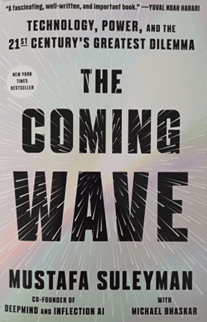

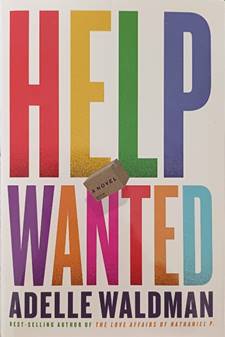




 Books worth reading